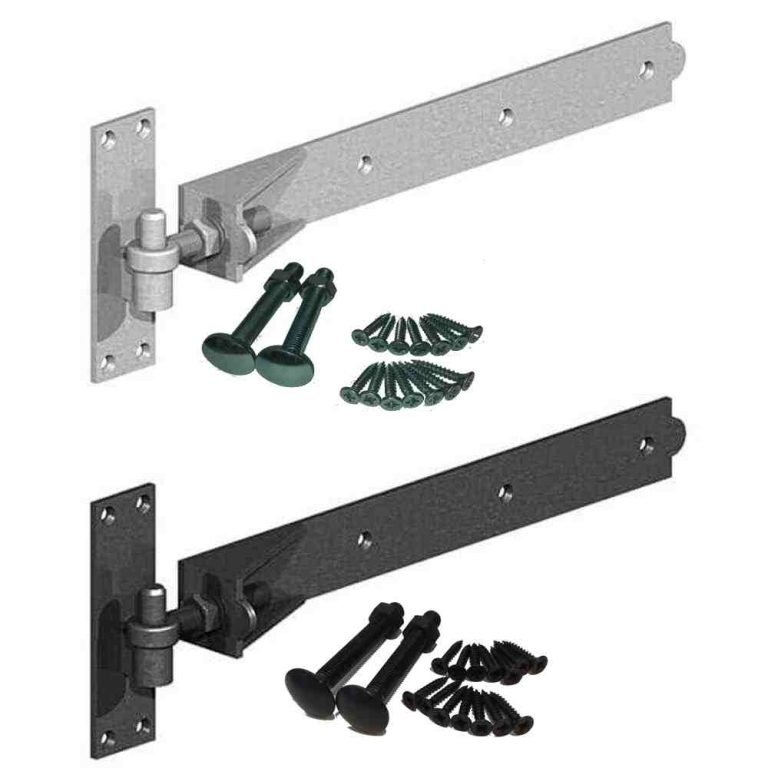
Adjustable Hook & Band Gate Hinges
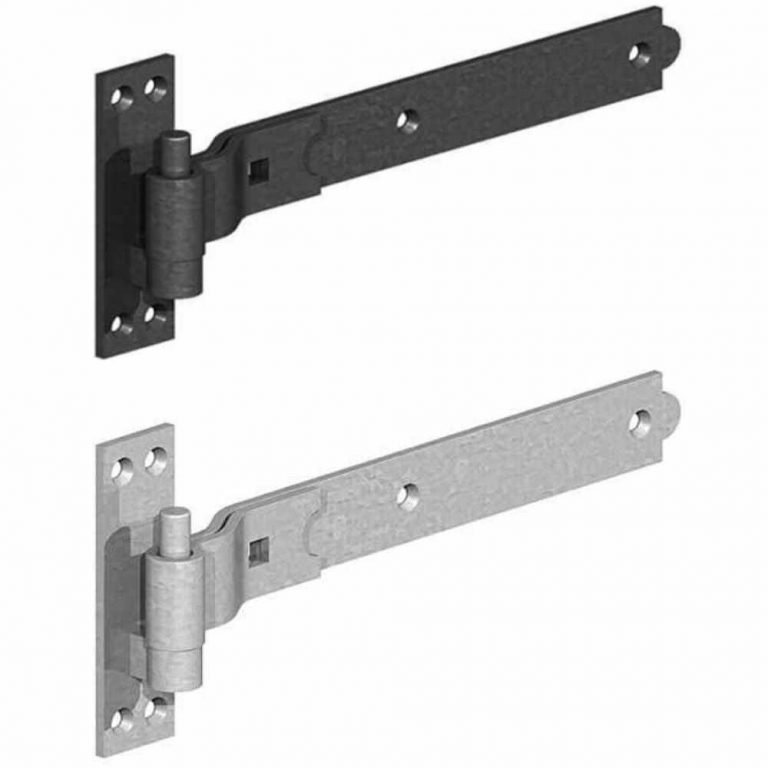
Cranked Band And Gudgeon Hinges
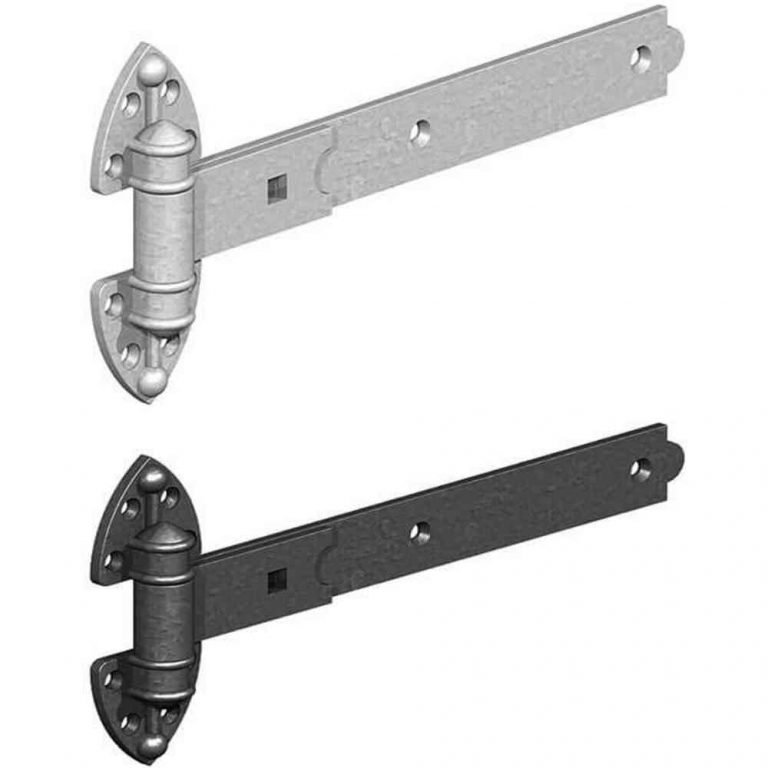
Heavy Duty Reversible Gate Hinges
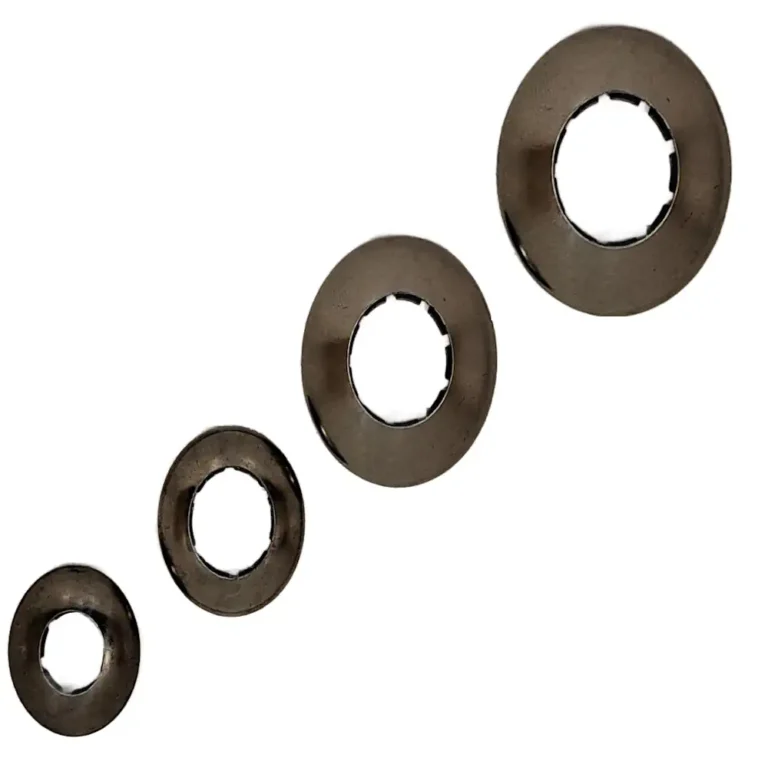
Push Fit Gate Security Collar
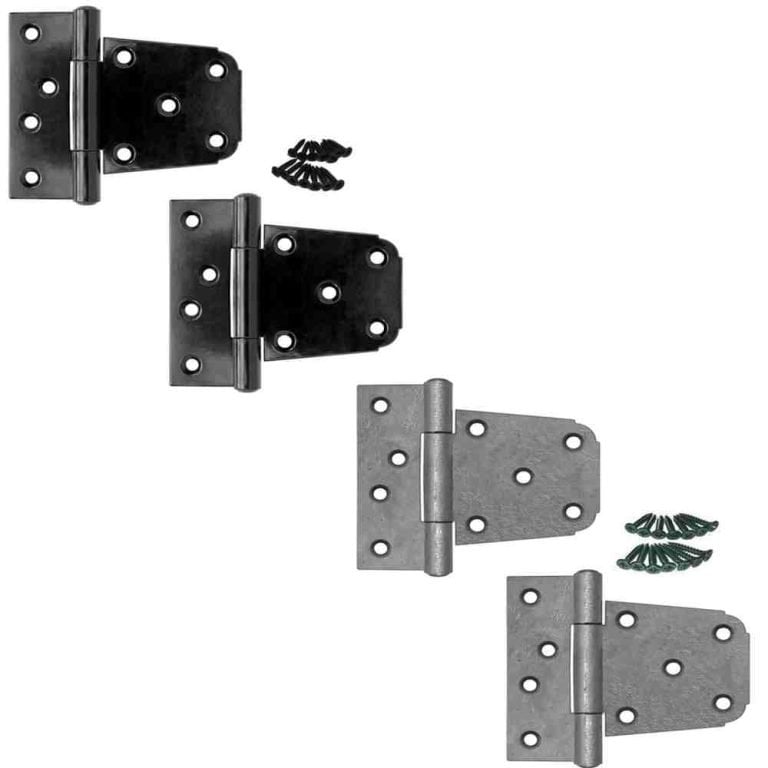
Heavy duty off set gate hinge 89mm x 115mm
Hook on plate
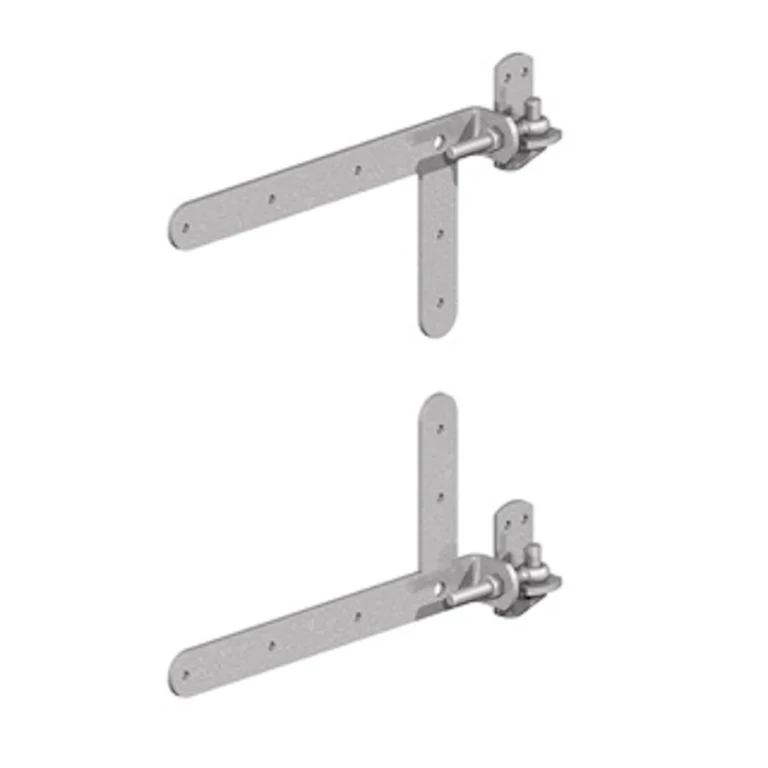
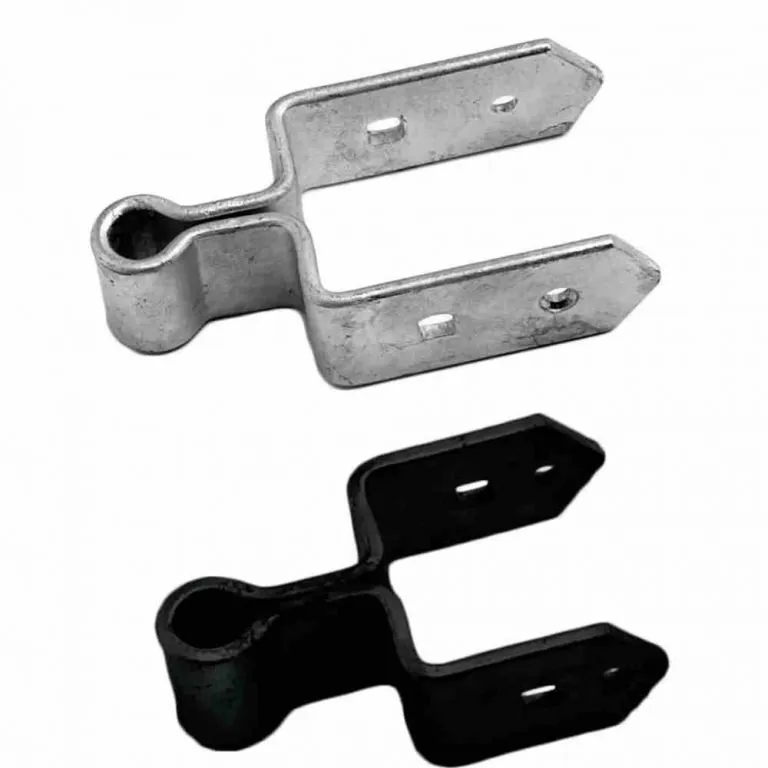
Field gate double strap bottom hinges
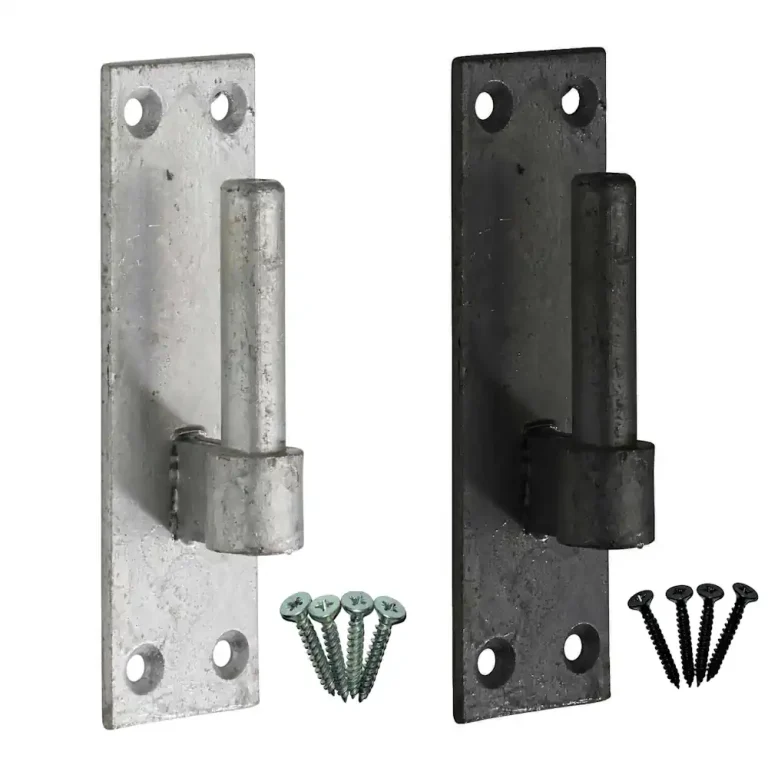
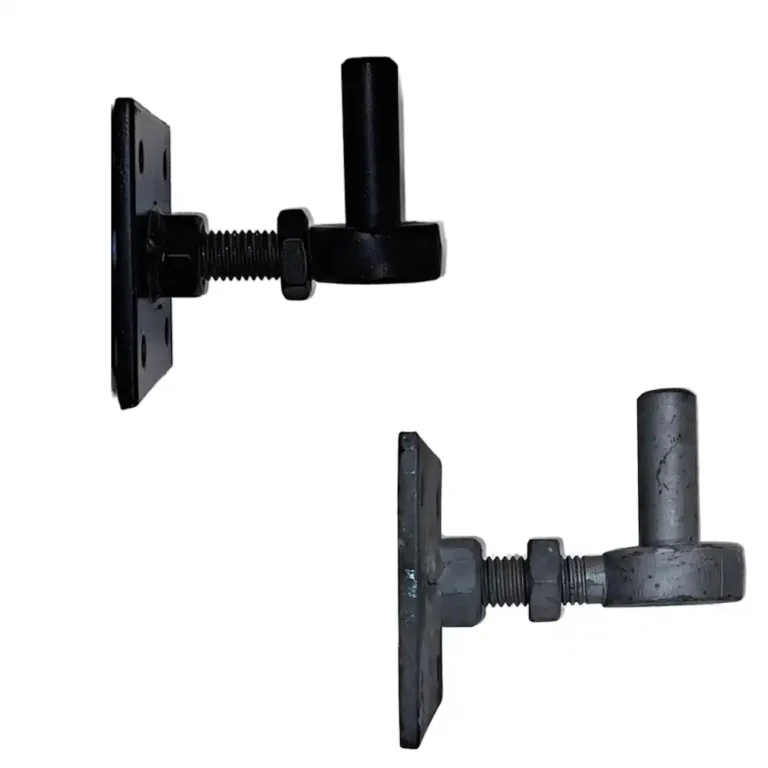
Adjustable Hook on 4″ x 4″ Plate
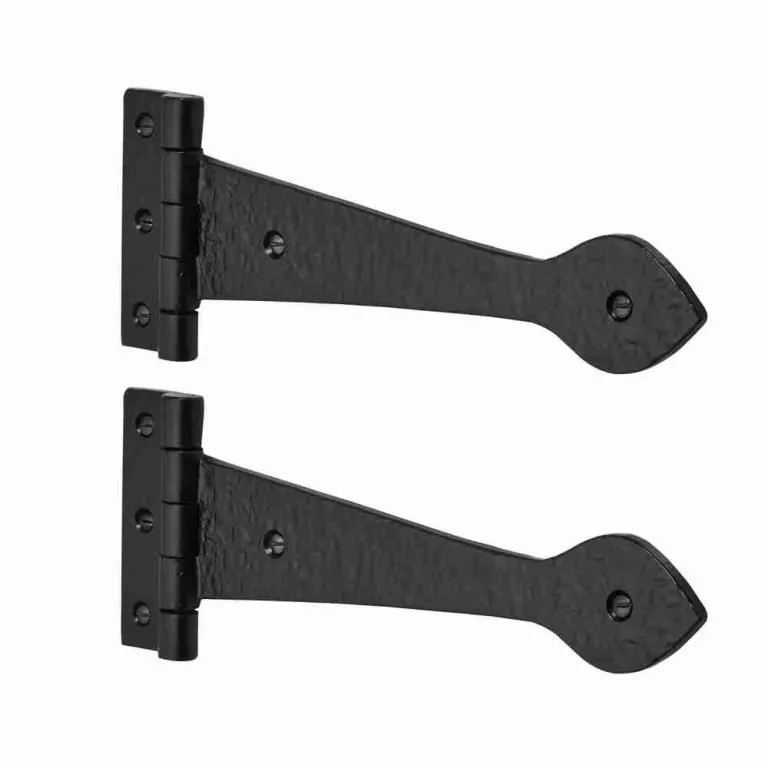
Tudor Tee Hinges
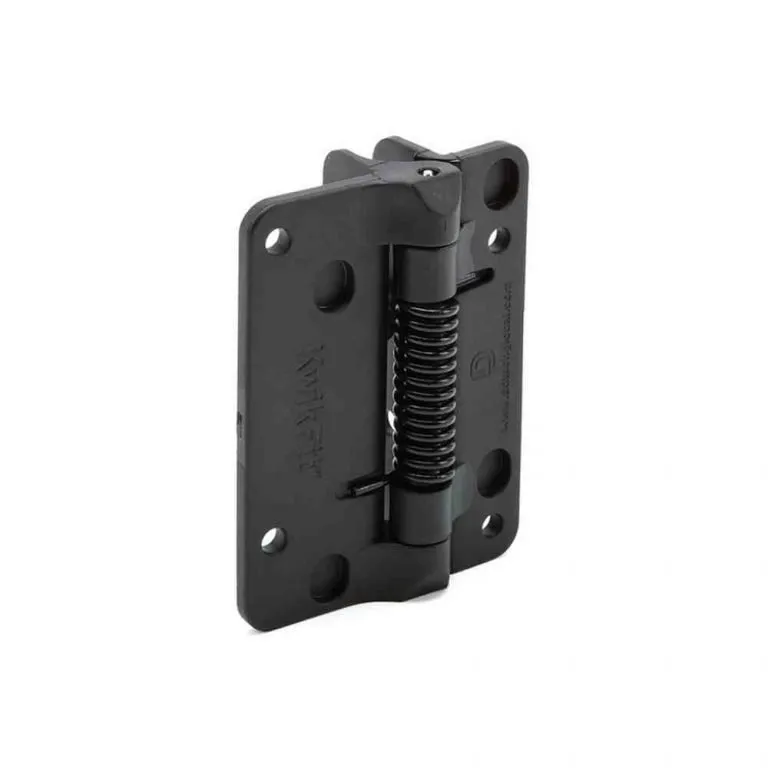
D & D KwikFit Fixed Tension Hinges
Frequently Asked Questions
Got a question? Click on any of the questions below to reveal the answer.
What size hinges do I need for a timber gate or garage door?
There isn’t really a one-size-fits-all answer here, as the size of hinge you need will depend on the width of the gate or door you’re hanging.
As a general rule of thumb, with Tee hinges I’d normally look for a hinge around half the width of the gate or door. So, for example, if your gate is 900mm wide, something around the 450mm mark would generally be a sensible starting point.
Band & Gudgeon hinges, reversible hinges or adjustable hinges can often be a little shorter than this, simply because of the way they are made and fitted and also for the fact that they are heavy duty hinges. Aim for a third of the width of each gate for normal use (i.e. 900mm wide gate, then a 300mm hinge should suffice), for high traffic areas where the gates/doors are opened a lot through the day then go for a hinge half the width of each gate (i.e. 900mm wide gate/door then 450mm wide hinge).
If you’re stuck between two sizes, I’d generally go for the larger one. A hinge that is slightly over-specced isn’t going to cause you any problems. One that is too small quite possibly will!
Which type of hinge is best for a wooden gate?
This really depends on the size of the gate.
For a fairly standard fence panel style pedestrian gate, a decent pair of Tee hinges hinges will usually do the job perfectly well.
Once you start getting into larger and heavier gates, I’d normally look towards Band & Gudgeon, reversible or adjustable hinges. The long hinge band runs across the face of the gate and helps spread the load, rather than putting all the strain into a relatively small area.
Adjustable gate hinges are another very good option for larger timber gates. Their big advantage is that they give you a bit of adjustment after the gate has been fitted, which can be extremely handy if the gate settles or moves slightly over time.
Timber being timber, it does have a habit of moving when it feels like it!
Adjustable hinges are also good to use on garage doors, just bear in mind you won’t get the full range of adjustment that you would on a gate, as the doors are trapped within an enclosed opening.
How many hinges do I need on a wooden gate or garage door?
For most timber gates and garage doors, two properly sized hinges will be absolutely fine.
If the gate or door is 2000mm high (or taller), then a third hinge is recommended to help support the weight and reduce some of the strain on the other two hinges
The important bit here though is properly sized hinges.
Three small hinges are not automatically better than two decent heavy-duty ones. If the hinges are too small for the size of the gate, simply adding another undersized hinge isn’t really fixing the problem.
Why has my wooden gate started to drop?
There are many reasons why a wooden gate can drop or sag.
The hinges may not be long enough for the size of the gate, the screws or bolts may have started to work loose, the gate post may have moved, or there may not be enough bracing built into the gate.
And then, of course, there is the timber itself.
Wood expands and contracts as moisture levels and the weather change, so a small amount of movement over the course of the year is perfectly normal.
Using correctly sized hinges, decent outdoor fixings and making sure the gate is properly constructed and braced will all help keep things where they should be.
If you’ve got a particularly large or heavy gate, adjustable hinges can be well worth using. If the gate does move slightly, you can usually tweak the alignment rather than having to take the whole thing off and start moving hinges around.
Much less swearing involved!
If your gate has dropped due the post moving then it can be an idea to try fitting a gate wheel to take some of the weight off the gate posts.
Are adjustable gate hinges worth using?
For larger timber gates, driveway gates and heavy garage doors, I’d say yes, they often are.
The main advantage is exactly what the name suggests. They can be adjusted after the gate has been hung.
If the gate settles slightly, the post moves a touch or the timber changes with the seasons, you can make small adjustments to bring everything back into line without having to remove and refit the hinges.
That can be a real bonus with timber gates because wood is never completely static.
For a small lightweight garden gate (think fence panel style gates), adjustable hinges can sometimes be a bit unnecessary. A good pair of Tee hinges will normally be more than adequate.
But once you start getting into bigger and heavier gates, the ability to make adjustments later can be very useful indeed.
What is the difference between Tee hinges, Band & Gudgeon hinges, reversible hinges and adjustable hinges?
There are quite a few different styles of gate hinge available, but these are probably the four you’ll come across most often.
Tee hinges are the simplest of the bunch. They’re widely used on garden gates, shed doors and other fairly lightweight timber doors. Easy to fit, relatively inexpensive and perfectly good when correctly sized for the job.
Band & Gudgeon hinges are generally better suited to larger and heavier gates. The long band runs across the face of the gate and helps spread the weight, while the gudgeon forms the pivot point attached to the post or frame. They’re a tried and tested way of hanging a substantial timber gate.
Reversible hinges work slightly differently. Once fitted, the hinge pin is enclosed within the hinge, meaning the gate cannot simply be lifted off the pins. This makes them particularly useful where a little extra security is wanted.
Adjustable hinges are similar in principle to Band & Gudgeon hinges, but with the added bonus that you can alter the position of the gate after it has been fitted.
That makes them particularly useful on larger gates where a little bit of movement, settlement or drop over time is always a possibility.
So, very roughly speaking: Tee hinges for the lighter stuff, Band & Gudgeon for heavier gates, reversible gate hinges where you want a heavy duty hinge that looks a bit more fancy than an adjustable or cranked hinge, and adjustable hinges where having the ability to fine-tune things later could save you a fair bit of hassle.
Can my gates swing both ways?
To allow the gates to swing both ways then you will need to use field gate hinges (or wrap around hinges). These will need to be fitted to the gate posts within the opening.
Doing this will require larger gate clearances than usual, so you are unlikely to be able to do this to existing gates (unless they already swing both ways).
I need to buy 3 hinges from you, is this possible?
Yes. With the exception of the D&D Technologies hinges, all our hinges are available to buy in quantities of 3 hinges (i.e. 1.5 Pair).
Simply increase the quantity to 1.5 in the product quantity box.
Filter by price
Filter by
- Adjustable Hinges (17)
- Cranked Hinges (2)
- Decorative Hinges (2)
- Field Gate Hinges (5)
- Hinge Front (2)
- Hook & Band (1)
- Pivoting Hinges (1)
- Reversible Hinges (1)
- Self Closing (15)
- Straight Hook and Band (1)
- Strap Hinge (1)
- Tee Hinges (6)
On Sale
-
Side Gate Kits Prepacked
Rated 5.00 out of 5£13.44 – £14.35Price range: £13.44 through £14.35 -
Throw Over Gate Loops
Rated 5.00 out of 5£9.16 – £24.42Price range: £9.16 through £24.42 -
Traditional Cast Cabin Hooks
Rated 5.00 out of 5£3.30 – £27.79Price range: £3.30 through £27.79